























Businesses worldwide are adopting AI agents to solve complex problems that traditional automation cannot handle. These intelligent systems understand context, make decisions, and act on their own across every business function.
From handling customer questions to improving supply chains, AI agents tackle complex challenges that once needed significant human work. Bangladesh is also jumping into the AI agents era, with forward-thinking companies exploring these technologies to stay competitive in the global market.
Key Takeaways:
- AI agents handle routine tasks automatically while humans focus on strategic work
- They provide instant customer support across multiple languages and channels
- Businesses see improved efficiency, lower costs, and higher revenue
- Implementation typically shows results within a few months
- Success requires proper planning, integration, and team training
Key Business Problems AI Agents Solve
Inefficient Customer Support
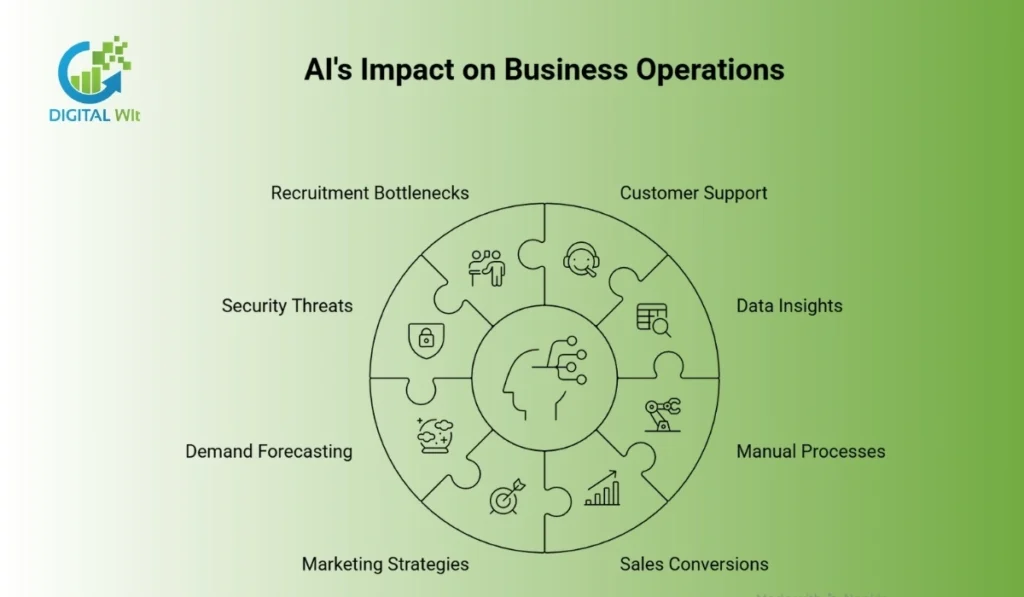
Customer support teams often struggle with overwhelming ticket volumes, long wait times, and inconsistent service quality. Human agents answer the same basic questions repeatedly while complex issues pile up.
AI agents transform this by handling routine questions instantly, around the clock, in multiple languages. They resolve common problems without human involvement and smartly route complex cases to the right specialists with full context. This dramatically reduces wait times while freeing human agents to focus on situations requiring empathy and creativity.
Data Overload and Lack of Insights
Modern businesses collect enormous amounts of data but struggle to extract useful insights. Reports sit unread, patterns go unnoticed, and opportunities slip away because humans simply cannot process information at this scale.
AI agents continuously analyze data streams, identify trends, detect unusual patterns, and surface relevant insights to decision makers. They turn raw data into clear recommendations, highlighting what needs attention and suggesting specific actions based on past patterns.
Time Consuming Manual Processes
Many business operations still involve repetitive manual tasks like data entry, document processing, and status updates. These activities consume valuable employee time while introducing errors and delays.
AI agents automate these processes completely. They extract information from documents, update systems, match records, and ensure data flows smoothly between platforms. What once took hours happens in seconds with greater accuracy.
Low Sales Conversions
Sales teams often struggle to identify the best prospects, personalize outreach effectively, and engage leads at optimal times. Without AI assistance, they rely on intuition and limited data, resulting in missed opportunities and inefficient resource use.
AI agents analyze buyer signals, score leads based on conversion probability, and suggest personalized approaches for each prospect. They can even conduct initial outreach, qualify leads, and schedule meetings with high-potential buyers, significantly increasing conversion rates.
Unfocused Marketing Strategies
Marketing teams face the challenge of reaching the right audience with the right message at the right time. Without intelligent systems, campaigns often rely on broad segmentation and generic messaging that fails to connect.
AI agents enable highly personalized marketing at scale. They analyze individual customer behavior, predict preferences, and deliver tailored content through optimal channels. They continuously test variations, learn what works, and adjust campaigns in real time to maximize engagement and return on investment.
Inaccurate Demand Forecasting
Businesses frequently struggle with inventory management, either overstocking and tying up capital or understocking and missing sales. Traditional forecasting methods fail to account for the complex factors influencing demand.
AI agents process historical sales data, market trends, seasonality, economic indicators, and even weather patterns to generate accurate demand forecasts. They continuously refine predictions as new information emerges, helping businesses optimize inventory levels and reduce waste.
Rising Security Threats and Fraud
Cybersecurity threats evolve constantly, and fraud schemes become increasingly sophisticated. Human security teams cannot monitor every transaction, login attempt, or network activity in real time.
AI agents provide continuous vigilance, analyzing patterns to detect unusual behavior that might indicate fraud or security breaches. They identify threats before damage occurs and can automatically implement protective measures like blocking suspicious transactions or isolating compromised systems.
Recruitment Bottlenecks and Talent Gaps
HR teams spend countless hours screening resumes, scheduling interviews, and coordinating with candidates. This manual process slows hiring while top talent accepts offers elsewhere.
AI agents streamline recruitment by automatically parsing resumes, matching candidates to requirements, scheduling interviews based on availability, and even conducting initial screening conversations. They ensure qualified candidates don’t fall through the cracks while dramatically reducing time to hire.
Real World AI Agent Use Cases by Business Function
Customer Service and Support
Modern AI agents handle customer conversations through text and voice with remarkable naturalness. They understand questions, context, and even emotional tone to provide helpful responses that feel human.
These agents resolve common issues like password resets, order tracking, and product questions instantly. They access customer data and transaction history to provide personalized assistance without wait times or transfers.
AI agents maintain conversation continuity across channels. A customer might start a chat on mobile, continue via email, and finish on a phone call with the agent remembering everything discussed.
Sales and Revenue Operations
AI agents analyze thousands of signals to predict which leads are most likely to convert. They consider factors like engagement patterns, company characteristics, and buying signals to prioritize prospects.
This scoring allows sales teams to focus energy where it matters most. Agents continuously update scores as prospects interact with content, attend events, or show changing intent.
Virtual sales representatives powered by AI conduct outreach campaigns, personalize messages based on prospect profiles, and qualify leads through initial conversations.
Marketing and Growth
AI agents design and execute marketing campaigns tailored to individual customer segments or even specific people. They determine optimal messaging, timing, channel selection, and creative elements based on what historically drives action.
These agents coordinate complex campaigns across email, social media, advertising platforms, and content recommendations. They adjust tactics in real time based on performance data.
AI agents generate marketing content including social posts, email copy, product descriptions, and even blog drafts. They ensure consistent brand voice while tailoring messages for specific audiences.
Human Resources and Recruitment
AI agents parse hundreds of resumes in minutes, extracting relevant qualifications and matching candidates to job requirements. They rank applicants based on fit and highlight promising candidates recruiters should review.
Scheduling agents coordinate between recruiters, hiring managers, and candidates to find optimal interview times. They send reminders, handle rescheduling requests, and ensure smooth logistics throughout the hiring process.
During onboarding, AI agents guide new hires through paperwork, training modules, and initial setup tasks. They answer common questions, ensure compliance, and personalize the onboarding experience based on role and experience level.
Finance and Fraud Detection
AI agents continuously monitor financial transactions, flagging unusual patterns that might indicate fraud, errors, or compliance issues. They analyze transaction amounts, timing, locations, and counterparties against historical norms.
These agents work faster than human auditors, reviewing every transaction rather than sampling. They adapt to emerging fraud tactics by learning from new schemes as they appear.
Financial advisory agents help businesses optimize cash flow, manage expenses, and make investment decisions. They provide scenario analysis and recommendations based on financial goals and risk tolerance.
Supply Chain and Logistics
AI agents predict future demand by analyzing sales history, market trends, promotional calendars, and external factors. They generate forecasts at detailed levels, predicting demand for specific products in particular locations.
These predictions enable better inventory planning, production scheduling, and resource allocation. Agents update forecasts continuously as conditions change, keeping plans aligned with reality.
Logistics agents optimize delivery routes, select appropriate carriers, track shipments, and proactively communicate delays to customers. They minimize shipping costs while meeting delivery commitments.
Healthcare and Patient Management
Healthcare AI agents handle appointment scheduling, insurance verification, billing inquiries, and medical record requests. They reduce administrative burden on staff while improving patient experience through faster, more convenient service.
AI agents monitor patient data from wearables and home health devices, alerting clinicians to concerning changes that require intervention. They can conduct routine check-ins, medication reminders, and symptom assessments.
These agents extend care beyond clinical settings, enabling continuous monitoring that catches problems early while reducing office visits.
Security and Surveillance
Security agents monitor networks, endpoints, and applications for signs of intrusion or malicious activity. They recognize attack patterns, unusual access attempts, and suspicious data transfers.
When threats are detected, agents can automatically implement countermeasures like blocking IP addresses, disabling accounts, or isolating systems while alerting security teams for further investigation.
AI agents protect online platforms from attacks including DDoS attempts, credential stuffing, and payment fraud. They distinguish legitimate users from bots and attackers using behavioral analysis.
Industry Specific AI Agent Success Stories
Healthcare
A large hospital network implemented AI agents to manage patient communications and appointment logistics. The agents handle appointment scheduling, send reminders, conduct pre-visit screenings, and answer common questions.
Results included fewer missed appointments, decreased call volume for scheduling staff, and improved patient satisfaction scores. The agents freed nurses to focus on clinical care rather than administrative coordination.
Retail and eCommerce
A major online retailer deployed AI shopping assistants that help customers find products, answer detailed questions about specifications and compatibility, and provide personalized recommendations.
These agents increased conversion rates and reduced product returns by helping customers make better informed purchase decisions. Average order values increased as agents suggested complementary products customers found genuinely useful.
Fintech
A digital banking platform uses AI agents for customer service, fraud detection, and personalized financial advice. The agents handle routine banking questions, identify suspicious transactions immediately, and provide spending insights.
The fintech company reduced support costs while improving service availability around the clock. Fraud detection accuracy improved dramatically, protecting customer accounts more effectively than previous systems.
Logistics and Manufacturing
A logistics company implemented AI agents to optimize delivery routes, predict maintenance needs, and manage warehouse operations. The agents coordinate thousands of shipments daily, adjusting routes based on traffic, weather, and priority.
The company achieved fuel savings, reduced delivery times, and improved on-time performance. Predictive maintenance agents reduced equipment downtime by identifying potential failures before they occurred.
How Businesses Implement AI Agents
AI Consulting and Use Case Selection
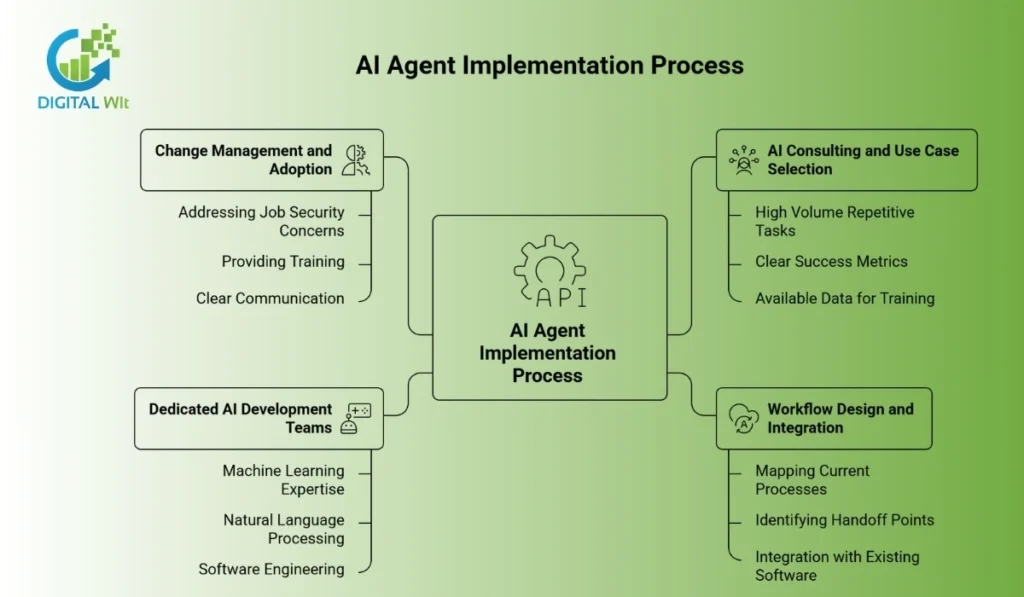
Successful AI agent implementation begins with identifying high impact use cases. Businesses work with consultants or internal teams to analyze processes, pain points, and opportunities where AI agents could deliver measurable value.
The best initial use cases typically involve high volume repetitive tasks, clear success metrics, and available data for training. Starting with manageable scope allows teams to demonstrate value and learn before tackling more complex implementations.
Workflow Design and Integration
Once use cases are selected, teams design workflows that incorporate AI agents alongside human workers and existing systems. This involves mapping current processes, identifying handoff points, and determining when agents should act on their own versus escalate to humans.
Integration with existing software is crucial. AI agents need access to CRM systems, databases, communication platforms, and other tools to function effectively. APIs and integration platforms enable agents to interact with these systems smoothly.
Dedicated AI Development Teams
Building effective AI agents often requires specialized skills in machine learning, natural language processing, and software engineering. Many businesses establish dedicated AI teams or partner with development firms that have relevant expertise.
These teams handle agent development, training, testing, and refinement. They work closely with business stakeholders to ensure agents meet actual needs and continuously improve based on performance data and user feedback.
Change Management and Adoption
Technology alone doesn’t guarantee results. Businesses must prepare employees for working alongside AI agents, addressing concerns about job security and providing training on how to collaborate with these systems.
Effective change management involves clear communication about how AI agents will support rather than replace human workers. Demonstrating early wins and showing how agents make jobs easier helps drive adoption and enthusiasm.
Real World Impact of AI Agents
Operational Efficiency Gains
Businesses implementing AI agents typically see dramatic efficiency improvements. Tasks that previously took hours happen in minutes. Processes that required multiple handoffs and approvals complete automatically.
These efficiency gains compound across the organization. When customer service agents spend less time on routine questions, sales teams waste less effort on unqualified leads, and operations staff eliminate manual data entry, the cumulative time savings become substantial.
Improved Customer Experience
AI agents enable businesses to provide faster, more consistent, and more personalized service than previously possible. Customers get immediate responses regardless of time or day, and interactions feel tailored to their specific situations.
This improved experience translates to higher satisfaction scores, increased loyalty, and word of mouth recommendations. Customers appreciate the convenience while also valuing that human agents are more available for complex situations requiring empathy.
Revenue Growth and Cost Reduction
The business impact of AI agents shows up clearly in financial results. Revenue grows as conversion rates improve, customer lifetime value increases, and new sales channels become viable at scale.
At the same time, costs decrease as businesses handle more volume without proportional headcount increases. Support costs per customer drop significantly, while operational expenses decline through automation and optimization.
Choosing the Right AI Agent Platform or Partner
Evaluation Criteria and Technology Stack
Selecting an AI agent solution requires evaluating multiple factors. Consider the platform’s underlying technology, including which AI models it uses, how it handles training and improvement, and whether it supports the languages and channels your business needs.
Integration capabilities matter immensely. The platform should connect easily with your existing systems through APIs, webhooks, or native integrations. Security and compliance features are also critical, especially in regulated industries.
Industry Experience and Case Studies
Look for platforms and partners with proven experience in your industry. They should understand your specific challenges, regulatory requirements, and typical use cases.
Request case studies from similar businesses. Ask about results achieved, implementation timelines, and challenges encountered. Speaking with existing customers provides valuable insights into what working with the provider is really like.
Scalability and Long Term Support
Choose solutions that can grow with your business. The platform should handle increasing volumes without performance issues and support expanding use cases without requiring complete rebuilds.
Evaluate the provider’s commitment to ongoing support, updates, and improvements. AI technology evolves rapidly, and your partner should continuously enhance their platform to incorporate new capabilities and best practices.
Final Thoughts
AI agents have transformed from experimental technology into essential business tools solving real problems across industries. They deliver measurable improvements in efficiency, customer experience, and financial performance.
The opportunity lies in leveraging AI agents strategically to differentiate your business. For companies navigating this transformation, partnering with experienced advisors makes a significant difference. Digital Wit, the best digital marketing agency in BD, helps businesses identify AI opportunities and implement solutions that deliver sustainable competitive advantages.
FAQs About AI Agents in Business
How are AI agents different from chatbots?
AI agents can reason, make decisions, and take actions on their own, while chatbots simply follow predefined scripts. Agents learn from experience and handle complex processes independently.
Which business functions benefit most from AI agents?
Customer service, sales, marketing, operations, and supply chain see the biggest impact. However, any function with high volume repetitive tasks and clear decision criteria can benefit significantly.
Are AI agents secure and compliant?
Reputable platforms implement strong security measures including encryption and access controls. They help maintain compliance through consistent processes and detailed audit logs.
How long does AI agent implementation take?
Simple implementations take a few weeks, while complex systems need a few months. Most businesses see meaningful results within the first few months of deployment.
Can small businesses use AI agents?
Yes, many AI agent platforms offer solutions for businesses of all sizes. Starting with specific use cases allows small businesses to benefit without large upfront investments.
Do AI agents replace human workers?
AI agents handle routine tasks, allowing human workers to focus on strategic, creative, and relationship-based work that requires human judgment and empathy.