












Most websites lost traffic in 2026 because of new Google updates, slow speed, bad Core Web Vitals, and AI Overviews. Many people feel scared of the next update. You work hard on content but Google still rewrites your title and hides your page.
Suppose you run an online shop, blog, or company website. Digital Wit will show simple steps to fix on-page SEO and technical SEO together, and how to make your site super fast, fully crawlable, trusted by E-E-A-T, and ready for AI search.
By the end, your website will love Google and Google will love you back in 2026. Let’s start!
Key takeaways
Introduction & 2026 SEO Landscape: On-page SEO and technical SEO work together to help your pages rank better in 2026. Search is now more focused on trust, fast speed, and clean site structure. When your content is clear and your website runs smooth, Google can find it fast and users stay longer.
Understanding On-Page SEO: On-page SEO helps search engines understand your page clearly. It improves ranking, brings more visitors, and builds trust over time. Good on-page work also makes your content easy to read and useful for users.
Core On-Page SEO Elements: Key on-page SEO works best when your title, meta description, headers, and keywords match what users want. A clean URL, strong content, fast images, and smart internal links help search engines understand your page. Good E-E-A-T, simple layout, mobile-friendly design, and schema markup give your page a better chance to rank in 2026.
On-Page SEO Techniques: On-page SEO in 2026 needs clear intent-based content and strong topic clusters that link well. Your content should show real experience so users can trust your words. You also need simple page structures so new AI crawlers can read your site without any problem.
On-Page SEO Workflow & Checklist: The on-page SEO process becomes easy when you follow a clear plan. It starts with intent research, strong content outlines, clean URLs, and optimized metadata. Good links, quick images, simple structure, and regular updates keep your pages healthy and help them rank better over time.
Common On-Page SEO Mistakes: Many on-page SEO mistakes happen because pages are not planned well. Keyword stuffing, weak or duplicate content, and missing metadata hurt your rank quickly. Orphan pages, poor structure, and cannibalization also confuse search engines and slow your growth.
Understanding Technical SEO: Technical SEO helps search engines crawl, index, and understand your pages. It improves speed, structure, and visibility, which is very important for ranking in 2026.
Core Elements of Technical SEO: Technical SEO helps your site load fast, stay easy to crawl, and give users a smooth experience on any device. These core elements work together to help your pages rank better and stay strong in search results.
Technical SEO Audit Checklist: A technical SEO audit helps your website stay fast, safe, and easy for Google to read. Regularly checking speed, mobile usability, structured data, indexing, architecture, and security keeps your site healthy and improves rankings.
Crawlability & Indexability: Your website must be easy for search engines to crawl and index so they can read your pages, avoid duplicates, follow links, and understand your full site structure.
XML Sitemap: An XML sitemap helps search engines find and index all important pages on your site, and creating it correctly while avoiding errors improves your website’s visibility and ranking.
Schema Markup for SEO Explained: Using schema markup helps search engines understand your content better and can improve your rankings and visibility in search results. It also makes your pages easier for AI and humans to read, giving users clear answers and a better experience.
How to Improve Site Speed & Core Web Vitals: Improving site speed and Core Web Vitals helps your pages load faster and keeps visitors happy. Optimizing images, using caching, and reducing slow scripts makes your website perform better in search results.
What Is On-Page SEO?
On-Page SEO is the practice of optimizing web pages to improve rankings in search engines. It focuses on the content and HTML source code of a page. This type of SEO helps search engines understand your page better. Good On-Page SEO improves user experience and keeps visitors engaged. It is one of the most important steps in a successful SEO strategy in 2026.
Key Elements of On-Page SEO
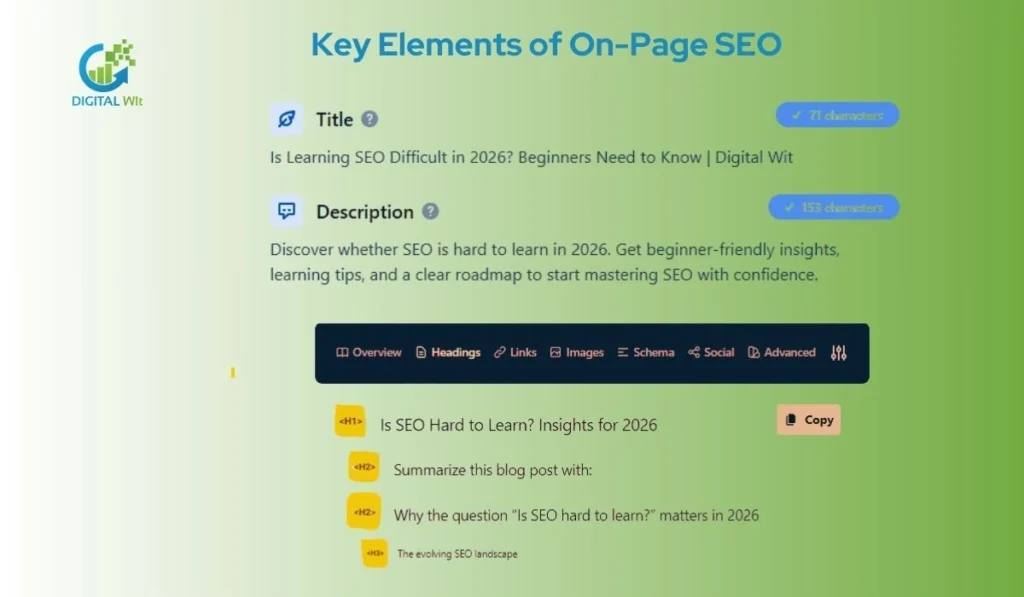
- Title Tags: The main heading shown in search results. It should include the main keyword.
- Meta Descriptions: Summaries that describe the page content. Make them clear and persuasive.
- Header Tags (H1-H6): Organize content into sections for readability and relevance.
- Content Quality: Ensure content is useful, unique, and answers user intent.
How On-Page SEO Helps
On-Page SEO directly affects rankings and user experience. When optimized correctly, it can:
- Improve visibility in search results
- Increase click-through rates
- Reduce bounce rates
- Strengthen topical authority
What Is Technical SEO?
Technical SEO focuses on website performance and backend structure. It ensures search engines can crawl, index, and rank your site efficiently. It also improves page speed, mobile usability, and overall site health. Without proper Technical SEO, even the best content may not rank. In 2026, it is crucial for websites facing AI-driven search updates.
Core Technical SEO Factors
- Site Speed: Faster websites rank better and provide a smooth user experience.
- Mobile Optimization: Pages must work well on all devices.
- Structured Data: Helps search engines understand content and show rich results.
- Crawlability & Indexing: Ensures all important pages are discovered by search engines.
On-Page vs Technical vs Off-Page SEO
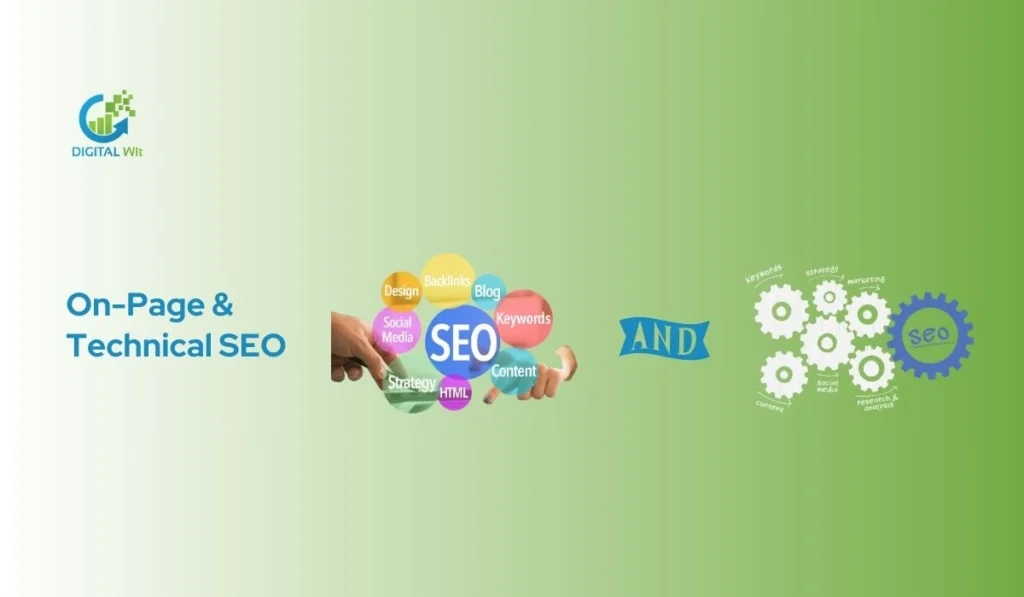
These three types of SEO work together for website success. On-Page focuses on content and structure. Technical SEO handles site performance and crawlability. Off-Page SEO involves backlinks and external signals.
Combining All SEO Types
Using all three types together improves rankings. Benefits include:
- Stronger authority and credibility
- Better user experience
- Higher organic traffic
- Protection against algorithm changes
Foundational SEO Concepts for 2026
Search Intent
Search intent is what a user wants when they type a query. It can be informational, transactional, or navigational. Understanding intent helps you create content that answers users’ questions. Aligning content with intent improves engagement and rankings.
E-E-A-T & Trust Signals
E-E-A-T means expertise, experience, authoritativeness, and trustworthiness. Websites showing these signals rank better. Adding author info, reviews, and credible references increases trust. It helps users feel confident in your content.
AI/LLM Search Behavior
AI-driven search uses advanced models to show better results. These systems value relevance, accuracy, and context. Content must satisfy both humans and AI crawlers.
Information Gain & Content Value
Content should provide new, useful information. It must answer questions fully. Valuable content keeps users engaged and encourages sharing.
Why On-Page SEO Matters
On-page SEO is the base of every successful website. It helps search engines understand your content and helps users get the right information at the right time. When your pages are well-optimized, Google can read them with ease and decide where to place them in search results.
The Main Goals of On-Page SEO
The first goal of on-page SEO is to help Google understand what your page is about. Google cannot read like humans, so you must guide it with clear words, clean structure, and proper formatting. This makes your page easier to scan and index.
Another goal is to help users find answers faster. When your content is simple and useful, visitors stay longer on your site. This sends a good signal to Google. It shows your page adds real value to the reader.
On-page SEO also aims to improve user experience. This includes small but important things like easy navigation, clean layout, and clear headings. When users enjoy reading your site, they return again.
Key Benefits of On-Page SEO
One big benefit of on-page SEO is better ranking. When your page follows good SEO rules, Google sees it as more helpful and ranks it higher. Good ranking brings more visitors without spending money on ads.
Another benefit is better understanding between your content and your audience. On-page SEO helps match your page with the exact search terms people use. This increases your chance of getting the right traffic.
You also get higher trust from users. When your page loads fast, is easy to read, and shares clear facts, users feel confident about your site. This trust can turn into leads or sales.
The Role of On-Page SEO in Ranking
On-page SEO helps Google judge the quality of your page. It looks at things like title tags, headings, URL, image alt text, and internal links. These elements help Google know if your page is worth showing on the first page.
It also improves how users behave on your site. When users stay longer, read more pages, and do not exit fast, Google sees these signals as positive. These signals increase your ranking over time.
On-page SEO connects your content strategy with your business goals. When your pages are optimized, every blog, service page, or product page works better. This means more growth for your website.
Key On-Page SEO Elements
On-page SEO helps Google understand your page and gives users a smooth reading experience. These elements guide search engines so they can rank your page higher. When you use them in the right way, your page becomes clear, helpful, and easy to crawl.
On-page SEO also builds trust. It shows Google that your page answers the user’s real question. This makes your content strong for long-term ranking.
Title Tag Optimization
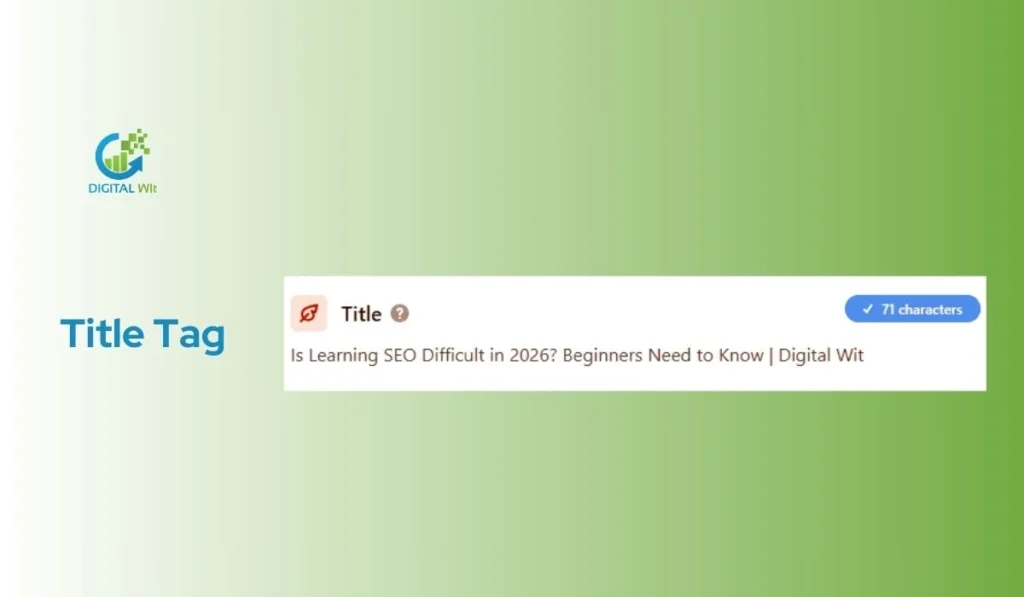
Your title tag tells Google what your page is about. It also helps users decide if they want to click. A clear and short title works best in 2026.
Keep your main keyword in the first part of the title. Make sure the title matches the content. Do not use confusing or long phrases. Try to make the title sound natural and easy to read.
Meta Description Best Practices
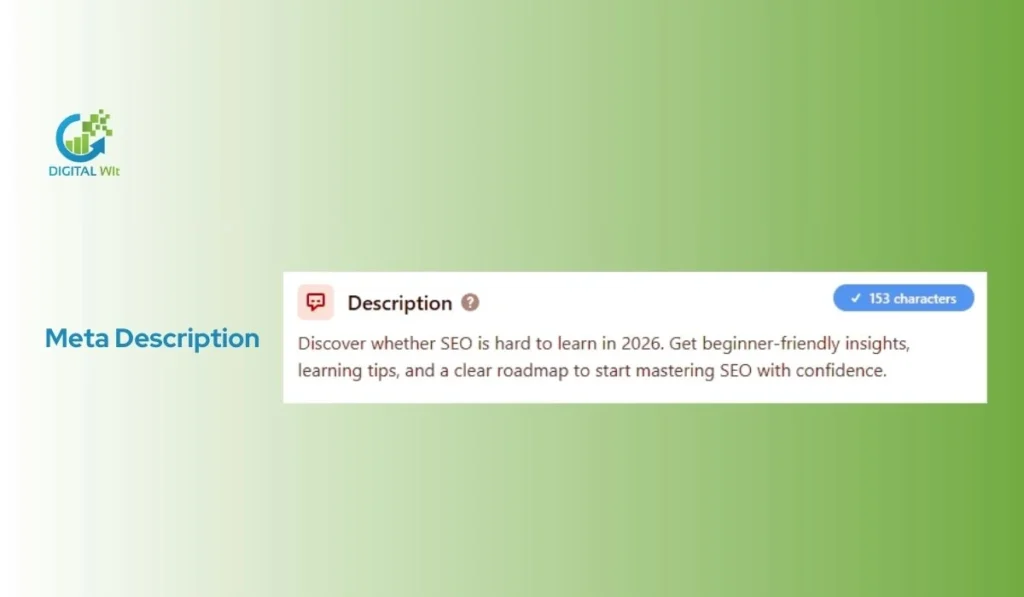
Meta descriptions do not help your ranking directly, but they bring more clicks and visitors. Google shows them as the short text under your title in search results.It helps users understand what they will get. A good meta description encourages people to visit your site.
Use simple words and keep it within 150 to 155 characters. Add your target keyword once. Make sure the description matches the title and user intent.
Header Tags (H1–H6)
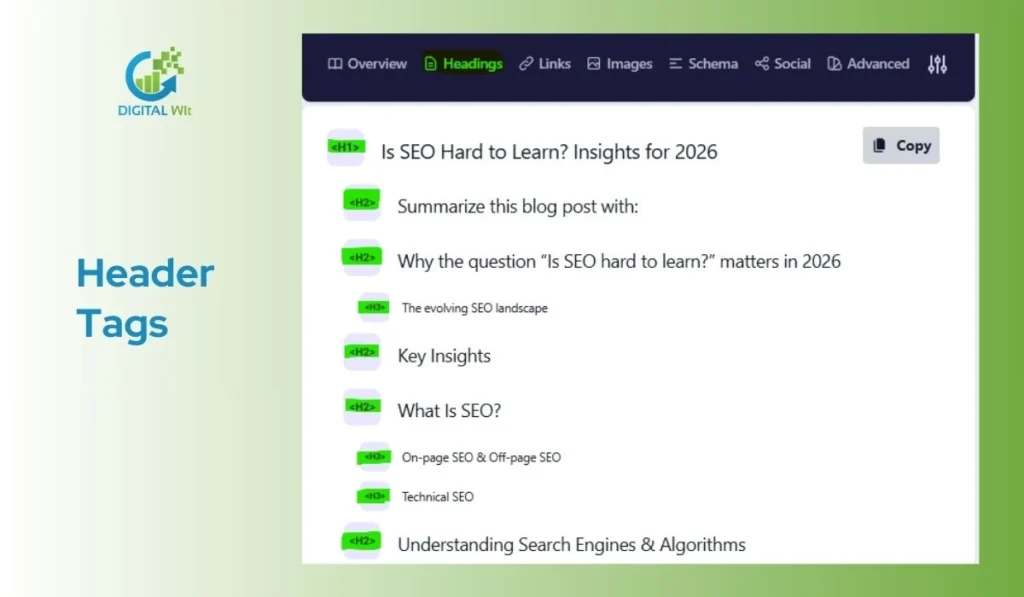
Header tags help you break your content into clear parts. They make the page easy to scan and understand. Google also reads these tags to learn your page structure.
Use one H1 for the main title. Use H2s to show big sections and H3 or H4 to divide those parts. Do not add too many headings without reason.
Keyword Optimization and Semantic Relevance
Keywords help Google match your page with user searches. But keyword stuffing will harm your ranking. Focus on natural use of keywords.Place your main keyword in the title, intro, and one or two headings. Add semantic words that support your topic. Keep the flow smooth so readers do not feel forced terms.
URL Structure
A clean URL helps both users and Google. It should be short and easy to read. Avoid numbers and long symbols.A good URL shows the page topic in simple words. Use lowercase letters and hyphens between words.
Content Quality, Depth and User Intent
Content must match what the user wants. If your content is clear and helpful, Google will push it higher. Try to answer the user’s question without extra noise.Use simple words and keep sentences short. Add examples where needed. Make sure each part adds value and stays on topic.
Advanced On-Page SEO Techniques for 2026
On-page SEO in 2026 is more focused on clear content, simple structure, and helpful user signals. Search engines now read pages like humans. They look for real experience, clean formatting, and easy navigation. When the content answers the user’s exact need, the page gets better ranking.
Strong on-page work also supports your technical setup. It helps both users and crawlers move through your site in a smooth way. With a good structure, internal links, and clear sections, your content becomes stronger and easier to index.
Intent-Based Content Structuring
Search intent is the main point of on-page SEO. When you match the user’s goal, Google understands the value of your page.
You can plan your sections based on four simple intent types: informational, navigational, commercial, and transactional.
This helps you decide what to write, how deep to go, and what questions to answer.
When your headings follow the natural flow of user needs, your content becomes easier to read and rank.
Topic Clusters and Internal Linking
Topic clusters help search engines understand your full topic coverage. You build one main pillar page and link smaller pages around it.
This makes your website look more organized and expert in one topic area.
Internal links also guide users to the next helpful page without stress.
You can add links inside text, in menus, or at the end of each section where it fits well.
Experience-Based Content Signals
Google now gives more value to real experience in your content. Pages that show personal use, real steps, or clear guidance perform better.
It builds trust and keeps users on your website for longer.
You can add simple examples, short cases, or clear steps from real work.
These signals help your page stand out against strong competitors.
Content Accessibility for AI Crawlers
AI crawlers read your page in a structured way. Clean headings, simple text, and clear HTML help them understand your content fast.
You can improve accessibility with structured data and compressed images.
Readable sections also help users stay longer on your page.
This balance supports both ranking growth and user satisfaction.
On-Page SEO Workflow & Checklist
The on-page SEO process follows a simple path. You start with keywords, then plan your content, and later optimize technical parts. This order helps your page stay clean and easy for search engines. Each step builds a strong base for the next one. When you follow this workflow, your content becomes more helpful and more visible.
Keyword and Intent Research
You begin with finding the right keywords. These keywords must match what people search for. You also check the intent behind each keyword. This helps you understand what users want to read.
Use simple tools to find search volume, difficulty, and topics. Choose terms that match your page goal and solve real user needs.
Content Planning and Outlining
After research, you plan your content outline. You list your headings and subheadings in a clear order. This keeps the content easy to read.
Your outline should match search intent. Place your main keyword in your title and key sections. This helps both readers and search engines understand the flow.
Metadata Optimization
Your title and meta description guide users to your page. Keep the title short and include your main keyword. Use an active tone that shows the value of your page.
Your meta description should explain what the page offers. It must be clear, simple, and under the character limit. This makes users click more.
SEO-Friendly URLs
Your URL should be short and clean. Use simple words that match your topic. Do not use numbers or random symbols.
Keep only one main keyword inside the URL. This makes it easy to understand for users and search engines.
Internal and External Links
You add links inside your page to guide your readers. Internal links help users move between your pages. External links support your facts.
Choose anchor text that fits the topic. Make sure each link adds value to the reader’s journey.
Image Optimization
Your images must load fast. Use small file sizes to speed up the page. Slow images make visitors leave quickly. Fast images keep people on your site longer. This improves your page experience and Core Web Vitals. Good image SEO also helps you rank in Google image search.
Compress your images
You can use free tools like TinyPNG or ShortPixel to make images smaller. Compression removes extra data without losing quality. Your page will load in under 3 seconds on mobile. This fixes LCP problems in Core Web Vitals. Visitors stay happy and Google loves your site more.
Use descriptive filenames.
Name your file like red-apple-fresh.jpg instead of IMG123.jpg. This tells Google what the image is about. It adds keyword relevance without stuffing. Search engines read filenames to understand content. Your images can rank higher in search results.
Use descriptive alt text.
Write alt text like “fresh red apple on wooden table” for the image. This helps blind users with screen readers. It also gives Google more context about the picture. If the image does not load, alt text shows instead. Alt text improves accessibility and on-page SEO score.
Schema Implementation
Schema helps search engines read your page better. It adds extra meaning to your content.
Use simple types like Article, FAQ, or Breadcrumb. Add the code with a plugin or manual script.
UX, Readability and Structure
Your page must look clean. Use short sentences and simple words.
Keep enough space between lines and paragraphs. This helps users stay longer.
Publishing and Indexing Validation
Before publishing, check your links, images, and formatting. Make sure your page is mobile-friendly.
After publishing, submit the URL in Search Console. Check if Google has indexed your page.
On-Page SEO Maintenance
Maintaining your on-page SEO is important for long-term rankings and user experience. Websites that are not updated regularly can lose traffic. Regular checks ensure content stays relevant and search engines index your pages properly. This section explains key tasks to keep your on-page SEO healthy.
Content Updates
Updating content helps your website stay fresh. Old articles may lose value over time.
- Check facts and statistics
- Add new examples or trends
- Improve readability and structure
- Update internal links to relevant pages
Frequent content updates keep users engaged and help search engines see your site as active and trustworthy.
Duplicate Title & Meta Fixing
Duplicate titles or meta descriptions can confuse search engines. They can harm your rankings.
- Identify duplicate titles using SEO tools
- Rewrite meta descriptions to make them unique
- Align titles with page content
- Ensure each page has a clear, distinct focus
Fixing duplicates improves click-through rates and prevents search engines from picking the wrong page.
Fixing Cannibalization
Keyword cannibalization happens when multiple pages compete for the same keyword. It lowers page authority.
- Find pages ranking for the same keyword
- Merge or remove low-value pages
- Redirect or adjust internal links
- Focus each page on a unique topic
Solving cannibalization strengthens topical authority and improves rankings.
Ranking & Behavior Monitoring
Tracking ranking and user behavior is essential. You can see what works and what needs improvement.
- Monitor page positions for target keywords
- Check bounce rate and time on page
- Analyze clicks and conversions
- Adjust content based on performance data
Regular monitoring helps maintain SEO performance and user satisfaction.
Most Common On-Page SEO Errors & Fixes
Most On-Page SEO errors can quietly harm your website’s rankings and user experience. Fixing them ensures better visibility, higher traffic, and improved engagement. Understanding common mistakes helps you maintain a strong SEO foundation in 2026.
Keyword Stuffing
Keyword stuffing happens when a page uses the same keywords too many times unnaturally. It can confuse search engines and make content hard to read. This reduces user engagement and lowers your rankings. The fix is to use keywords naturally and focus on related terms and phrases. You should include keywords in titles, meta descriptions, and content without repeating them unnecessarily.
Thin or Duplicate Content
Thin content has very little information, and duplicate content is copied from other pages. Both issues harm SEO and user trust. Pages with little value often get ignored by Google. To fix this, expand your content with useful details and make sure each page is unique. Update old content to improve its depth and relevance.
Missing Metadata
Missing title tags or meta descriptions make it hard for search engines and users to understand your page. This can reduce click-through rates. Always create clear and descriptive titles and meta descriptions. Include primary keywords naturally to improve search visibility.
Orphan Pages
Orphan pages are pages not linked from anywhere on your site. Google may not find them, which hurts indexing. To fix this, link these pages internally from relevant pages or menus. Ensure they are part of your site structure.
Poor Structure
A poorly structured page confuses readers and crawlers. Headings, paragraphs, and lists should be clear. Fix this by organizing content logically and using proper heading hierarchy.
Cannibalization Problems
Cannibalization occurs when multiple pages target the same keyword. Google may rank the wrong page or split authority. Solve this by consolidating pages or changing their focus to unique keywords.
Why Technical SEO Matters in 2026
Technical SEO is the process of optimizing your website’s infrastructure so search engines can crawl, index, and rank it effectively. In 2026, technical SEO is more important than ever because search engines now use AI and large language models to understand websites. A well-optimized site improves visibility, user experience, and ranking opportunities.
Website Speed
Website speed affects both user experience and rankings.
- Pages must load quickly on mobile and desktop.
- Slow-loading sites increase bounce rates.
- Core Web Vitals like LCP, CLS, and INP are key metrics.
- Using caching, CDN, and optimized images helps speed up pages.
Indexing & Crawlability
Indexing ensures your pages appear in search results.
- Proper robots.txt and sitemap files guide search engines.
- Crawl budget must be managed to prioritize important pages.
- Duplicate content should be minimized to avoid wasted crawl resources.
- Log file analysis helps find errors and improve crawling efficiency.
Site Architecture
Site architecture is the way your pages are structured.
- Clear navigation helps users and search engines.
- Internal linking distributes authority to important pages.
- Proper URL structure keeps URLs clean and readable.
- Hierarchical content organization improves topical relevance.
Importance for AI Search Visibility
AI-driven search relies on structured, crawlable content.
- Technical SEO ensures AI bots can access and interpret pages.
- Structured data like schema improves chances for rich results.
- Mobile optimization and speed remain critical for AI ranking.
- A strong technical foundation supports future SEO trends.
Technical SEO Pillars
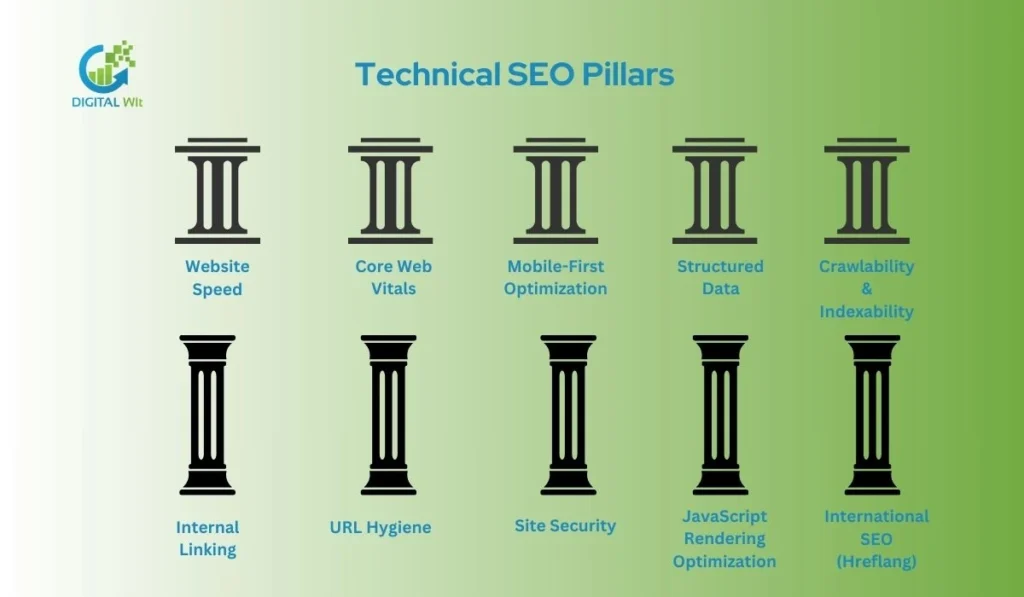
Technical SEO is the foundation of your website’s success. It ensures that search engines can crawl, index, and rank your pages effectively. In 2026, technical SEO is more important than ever because Google now focuses on page experience, AI-driven search results, and core web vitals.
A website that is fast, secure, and well-structured performs better in rankings and provides a better experience for users.
Website Speed Optimization
Website speed affects both user experience and rankings. Pages that load slowly often lead to higher bounce rates and lower engagement. You can improve speed by optimizing images in WebP or AVIF formats, enabling lazy loading, and reducing render-blocking resources.
Using a CDN and browser caching also helps deliver content faster to users worldwide. It is essential to test speed regularly using Google PageSpeed Insights and fix issues as they arise.
Core Web Vitals Enhancement
Core Web Vitals measure the quality of user experience on your website. LCP, INP, and CLS are the main metrics. LCP tracks how fast the main content loads, INP measures how quickly users can interact with a page, and CLS ensures visual stability.
Slow LCP on mobile can hurt rankings, so optimize images, fonts, and scripts. Checking these metrics often helps prevent traffic drops and improves engagement.
Mobile-First Optimization
Mobile-first optimization is critical because Google indexes the mobile version of your site first. Ensure your mobile pages load fast, have clear navigation, and display content correctly. Test different devices to check usability and fix any layout issues.
Mobile-friendly websites improve user experience and reduce bounce rates, which supports better ranking in search results.
Structured Data
Structured data helps search engines understand your content better. Implementing schema like Article, FAQPage, HowTo, and Product can increase visibility in rich results. Schema also supports AI-driven search, making your content more likely to appear in answer boxes. Validation tools help identify errors and ensure proper implementation.
Streamlined URL Strategy
A clean and descriptive URL structure makes crawling easier and helps users understand page content. Avoid long or complex URLs with unnecessary parameters. Use hyphens to separate words and keep URLs consistent. Proper URL strategy prevents duplicate content issues and improves indexability.
Crawlability & Indexability
Search engines must crawl and index your website efficiently. Use robots.txt to block unimportant pages, optimize your crawl budget, and fix soft 404s. Log file analysis helps detect crawl errors and pages that are not indexed.
Ensuring proper indexation keeps your most important pages visible in search results.
Site Architecture
Well-planned site architecture improves both user experience and SEO. Organize content into logical categories, connect related pages with internal links, and use breadcrumbs for navigation.
A clean hierarchy makes it easier for crawlers to find and index pages. Proper architecture supports topical authority and enhances rankings.
Duplicate Content & Canonicalization
Duplicate content can confuse search engines and reduce rankings. Use canonical tags to indicate the preferred version of a page. Remove or consolidate similar pages and monitor for content cannibalization. This ensures that Google indexes the correct pages and improves ranking consistency.
Redirects & 404 Handling
Broken links and redirect chains can hurt user experience and SEO. Implement 301 redirects for moved pages and fix broken links promptly. Proper handling of 404 pages prevents crawl errors and ensures that users and search engines can navigate your site without issues.
HTTPS & Security
A secure website builds trust with users and search engines. Use HTTPS across all pages to encrypt data. Regularly monitor for security issues and malware. Secure sites are more likely to rank higher and maintain user confidence.
JavaScript Rendering
JavaScript-heavy sites can cause crawling issues if not handled properly. Choose server-side rendering or hydration strategies to ensure content is visible to crawlers. Test how Google renders pages and fix any client-side rendering problems to avoid indexing issues.
International SEO (Hreflang)
Hreflang tags help search engines show the correct language or regional version of your page. Proper implementation avoids duplicate content penalties and improves rankings in local markets. It is important for sites targeting multiple countries or languages, especially with AI translation impacting indexing.
Ensuring Your Website Is Crawlable & Indexable
Making your website easy to crawl and index is the foundation of good SEO in 2026. Search engines like Google need to read your pages efficiently to rank them correctly. Without proper crawlability and indexability, even high-quality content may not appear in search results.
Understanding tools, technical checks, and strategies will help your website perform better.
Robots.txt
Robots.txt is a simple file that tells search engines which pages to crawl or ignore. You can block pages that are private or not important for SEO. Avoid blocking pages that matter for ranking. Always check robots.txt after updates to ensure important pages remain crawlable.
A wrong setting can prevent Googlebot from indexing key content.
Crawl Budget Management
Crawl budget is the number of pages a search engine crawls on your site in a given time. Duplicate pages, soft 404s, and orphan pages waste this budget. Prioritize important pages by improving internal linking and reducing low-value URLs.
This ensures Google crawls and indexes your most valuable content efficiently.
Duplicate Content Control
Duplicate content can confuse search engines and reduce ranking. Use canonical tags to show the main page version. Apply noindex tags for thin or duplicate pages. Regularly audit content to prevent index bloat. Keeping unique and clear content helps search engines understand your site better.
Handle Pagination & Orphan Pages
Pagination helps organize long lists of products or articles. Use proper rel=next and rel=prev tags for search engines. Orphan pages are those without internal links. They are hard to find for crawlers. Link all important pages within your site to improve indexability.
Log File Analysis Essentials
Log files show how search engines crawl your site. Analyzing them helps identify errors, slow pages, and unvisited URLs. Use insights to fix crawl issues and improve site structure. This ensures important pages are discovered and indexed correctly.
XML Sitemaps for SEO
An XML sitemap is a file that lists all the important pages on your website. It helps search engines like Google understand your website structure. With a proper sitemap, your pages get indexed faster.
In 2026, sitemaps are also important for AI-driven search and large websites. They improve crawlability and ensure no important page is missed.
Types of Sitemaps
There are several types of sitemaps you can use. A standard XML sitemap includes all main pages of your site. Image sitemaps show search engines your images for better visibility. Video sitemaps help video content appear in search results. Sitemap index files can combine multiple sitemaps for large websites.
Choosing the right type improves indexing and search visibility.
How to Create & Optimize Sitemaps
Creating a sitemap is simple. You can use tools like Screaming Frog, Semrush, or online generators. Include all important pages and avoid duplicate or low-value pages. Submit the sitemap to Google Search Console for faster indexing.
Keep it updated automatically when new pages are added. Large websites should break sitemaps into smaller files. Optimizing sitemaps helps search engines crawl your site efficiently.
Common Sitemap Errors
Many websites face sitemap issues. Broken links can stop pages from being indexed. Missing or outdated pages reduce crawl efficiency. Using unsupported formats may cause errors in search consoles. Always check for errors regularly and fix them. Proper maintenance ensures search engines find all valuable pages.
Complete Schema Markup Guide
Schema markup is a type of structured data that helps search engines understand your website content. Using schema correctly can improve rankings, increase click-through rates, and help pages appear as rich results in search engines.
In 2026, structured data also plays a key role in AI-driven search results and generative search.
Benefits of Structured Data
Structured data makes your content easier for search engines to read and understand. It can:
- Increase visibility in search results
- Enhance click-through rates with rich snippets
- Help Google show FAQs, HowTo, or product details directly
- Improve topical relevance for AI search overviews
Important Schema Types (Article, FAQ, Product, etc.)
There are many types of schema markup that websites can use:
- Article schema for blog posts or news
- FAQ schema to answer common questions
- Product schema for e-commerce listings
- HowTo schema for step-by-step guides
- Organization schema for company info
Schema Validation & Troubleshooting
To ensure your schema works properly:
- Use Google’s Rich Results Test or Schema Markup Validator
- Check for missing fields or errors
- Correct JSON-LD or Microdata syntax mistakes
- Re-test after every update to pages
Schema for AI Search Visibility
Structured data helps AI understand your website content faster. It:
- Increases chances of appearing in AI summaries
- Supports Google’s generative search features
- Highlights key entities and relationships
- Improves indexing speed for new content
Speed Optimization & Core Web Vitals in 2026
Improving your website speed and Core Web Vitals is very important for better user experience and higher Google rankings. In 2026, search engines will focus more on page experience and loading performance.
Faster websites keep visitors happy and reduce bounce rates. This section explains key factors that affect speed and how to optimize them.
LCP, INP, CLS Explained
Largest Contentful Paint (LCP) measures how fast the main content loads. A fast LCP ensures users see content quickly. Interaction to Next Paint (INP) measures how responsive your page is when users interact.
Cumulative Layout Shift (CLS) checks visual stability to prevent unexpected jumps. Monitoring these metrics helps improve both mobile and desktop performance.
Image/Video Optimization
Images and videos take most of the page loading time. Use modern formats like WebP or AVIF to reduce file sizes. Apply lazy loading so content loads only when needed. Always add descriptive alt text for accessibility and SEO. Compress files without losing quality to make pages faster.
Server, CDN, Caching
A good server reduces delays in delivering page content. Using a Content Delivery Network (CDN) brings files closer to users, making pages load faster globally. Enable browser caching so returning visitors do not need to reload every element. Regular server monitoring helps maintain high performance.
Reducing Render-Blocking Resources
CSS and JavaScript files can block page loading if not managed well. Use async or defer attributes for non-critical scripts. Minify CSS and JavaScript to reduce file size. Avoid large, unoptimized scripts that delay rendering. Proper handling of these resources improves LCP and overall page experience.
Complete Technical SEO Checklist 2026
Performing a technical SEO audit is essential to ensure your website ranks well in 2026. A proper audit helps you find hidden issues that can affect speed, crawlability, and overall user experience. Below is a practical checklist that covers the most important areas for technical SEO.
Speed & Performance Checklist
Check your website loading time on mobile and desktop. Pages that take more than three seconds can lose visitors quickly. Optimize images using WebP or AVIF formats and enable lazy loading. Minimize render-blocking scripts and use caching to improve page speed.
CWV Action Items
Core Web Vitals measure user experience on your pages. Focus on Largest Contentful Paint (LCP), Cumulative Layout Shift (CLS), and Interaction to Next Paint (INP). Ensure LCP loads under 2.5 seconds and CLS stays below 0.1. Test pages with real mobile devices and Google PageSpeed Insights.
Mobile Usability
Mobile-friendliness is mandatory for ranking. Check text size, button spacing, and viewport settings. Avoid horizontal scrolling and ensure responsive design. Test your website on different mobile devices to confirm layout consistency and fast loading.
Structured Data Validation
Use schema markup to help search engines understand your content. Validate structured data for articles, products, FAQs, and HowTo. Check for errors with Google Search Console or Rich Results Test. Correct missing or incorrect fields to enable rich results.
Indexation & Crawling
Check which pages Google can index using Google Search Console. Fix crawl errors and remove duplicate pages. Manage your crawl budget by blocking unnecessary URLs with robots.txt or noindex tags. Ensure important pages are crawled frequently.
Architecture Review
Ensure your site has a clear hierarchy. Use breadcrumbs and proper internal linking to connect pages logically. Avoid orphan pages and deep structures that make navigation hard. Proper architecture improves crawl efficiency and user experience.
Security Audit
Verify HTTPS is active on all pages. Check for expired SSL certificates and mixed content issues. Protect your site from malware and keep server software updated. A secure website builds trust with users and search engines.
Technical SEO Audit Process
Running a technical SEO audit helps your website stay visible, fast, and easy for Google to crawl. A proper audit improves user experience, fixes hidden issues, and ensures your pages perform well in 2026 search results.
Crawl the Site
Start by crawling your website using tools like Screaming Frog or Semrush. Crawling helps you find broken links, orphan pages, and errors that affect SEO. Check all important pages, images, and scripts. This gives you a complete map of your website’s structure.
Check Index Coverage
Review which pages are indexed by Google using Google Search Console. Identify pages that are missing, blocked, or accidentally marked noindex. Fixing index coverage ensures all valuable pages appear in search results. Keep your sitemap updated to guide search engines.
Analyze Core Web Vitals
Measure page speed and user experience using tools like PageSpeed Insights. Focus on Largest Contentful Paint, Interaction to Next Paint, and Cumulative Layout Shift. These metrics affect ranking and mobile experience. Optimize images, reduce scripts, and improve server response times.
Identify Linking & Architecture Issues
Examine your internal linking and website structure. Ensure main pages get enough links, and avoid deep pages that are hard to reach. Check navigation menus, breadcrumbs, and hierarchy. A clear structure helps users and search engines find content easily.
Review Duplicate Content & Hygiene
Look for duplicate or thin content that can confuse search engines. Use canonical tags where needed. Remove unnecessary pages and consolidate content for clarity. This prevents index bloat and improves ranking chances.
Validate Schema
Check structured data implementation on all pages. Use Schema.org markups like Article, FAQ, and HowTo. Correct errors to increase chances of rich results in search. Proper schema improves AI-driven search visibility.
Server Log Analysis
Analyze server logs to see how crawlers access your site. Identify crawl errors, slow-loading pages, and blocked resources. This helps prioritize technical fixes.
Prioritize Fixes
Make a list of all issues found during the audit. Fix high-impact errors first, such as Core Web Vitals and broken pages. Follow a structured plan to improve rankings and user experience efficiently.
Combined On-Page + Technical SEO Strategy
Optimizing your website for search engines in 2026 requires a mix of on-page and technical SEO. Both strategies work together to improve rankings, user experience, and visibility. A balanced approach ensures that your content is discoverable, valuable, and fast-loading.
Build Topic Clusters
Topic clusters help organize your content around main themes. Start by creating pillar pages that cover broad subjects. Then link related content pieces to these pillars. This structure improves internal linking and helps search engines understand your site.
Clusters also make it easier for users to navigate and find relevant information.
Improve Page Experience
Page experience focuses on how visitors feel while using your site. Check mobile-friendliness, site speed, and layout clarity. Optimize images, enable lazy loading, and reduce render-blocking scripts.
A smooth experience encourages users to stay longer and reduces bounce rates. Google uses these signals to rank pages higher in search results.
Semantic Optimization
Semantic SEO improves your content by focusing on meaning, not just keywords. Use related words, synonyms, and entities naturally. Organize content in a clear hierarchy with headings, paragraphs, and lists. Include internal links to related pages.
This approach helps search engines understand the topic and improves topical authority.
Aligning Technical + On-Page SEO
Combine technical SEO with on-page efforts for maximum impact. Ensure proper crawlability, indexing, and structured data. Use clean URL structures and canonical tags to avoid duplicate content. When technical elements support your content, rankings improve, and pages perform better in search results.
Continuous Optimization Framework
SEO is never one-time work. Regularly audit content, check Core Web Vitals, and update outdated information. Monitor rankings, traffic, and user behavior. Implement changes step by step and track results.
This continuous process keeps your site competitive and aligned with Google updates.
Tools for On-Page & Technical SEO
Crawlers
Crawlers are tools that check your website for errors and broken links. They scan all pages and report issues that affect your technical SEO. Using crawlers helps you maintain clean site architecture and improve crawlability. They also detect duplicate content and missing metadata so you can fix problems before they affect rankings. Popular tools include Screaming Frog and Deep crawl.
Many websites struggle with crawlability and site speed, but by following our proven SEO process as the top agency in Bangladesh, you can structure your on-page and technical SEO in a clean, scalable way.
Performance Testing
Performance testing tools measure how fast your website loads and how it performs for visitors. These tools help improve Core Web Vitals like LCP, INP, and CLS. You can identify slow-loading images, scripts, or server issues.
PageSpeed Insights, GTMetrix, and Lighthouse are widely used. Testing regularly ensures a better page experience and higher rankings.
Keyword Research
Keyword research tools help you find the right search terms for your content. They show search volume, difficulty, and related keywords. Proper keyword use improves on-page SEO and helps match search intent.
Tools like Semrush, Ahrefs, and Google Keyword Planner make research easier. Keyword clustering also improves topical authority.
Schema Tools
Schema tools help you create structured data for your pages. Structured data improves rich results on search engines. You can validate schemas for articles, FAQs, and products. Google’s Rich Results Test is useful for checking errors. Using schema markup increases visibility in search results.
Ranking & AI Visibility Tools
Ranking tools track your website position in search results. They show keyword rankings, traffic, and competitor performance. AI visibility tools help monitor how content appears in AI-driven search features. Ahrefs, Semrush, and specialized AI SEO platforms help optimize both on-page and technical SEO for 2026.
Biggest Technical SEO Errors
Technical SEO mistakes can stop your website from ranking well. Even small errors can affect traffic, user experience, and visibility on Google. Fixing these problems early keeps your site healthy and ensures search engines crawl and index your pages correctly.
Slow Website
A slow website frustrates users and lowers rankings. Pages that take too long to load can increase bounce rates. Common causes include large images, too many scripts, and poor hosting.
To fix this, compress images, use caching, and remove unnecessary plugins. Test speed regularly using tools like Google PageSpeed Insights.
JS Rendering Problems
JavaScript rendering issues happen when content does not show properly to search engines. Your site may look fine in a browser, but Google might not see all content. This affects indexing and rankings. Solve this by using server-side rendering, reducing heavy scripts, and checking rendered HTML in Google Search Console.
Redirect Chains
Redirect chains happen when one URL redirects to another multiple times. This wastes crawl budget and slows page loading. It can confuse search engines and reduce ranking signals. Fix chains by redirecting directly to the final page. Keep the number of redirects minimal. Regularly audit redirects using SEO tools.
Broken Links
Broken links lead to 404 errors and poor user experience. They also reduce link equity and trust signals. Check for broken links on your website using Screaming Frog or other crawlers. Update, remove, or redirect broken URLs. Keep monitoring regularly to avoid new issues.
Missing Sitemaps
Sitemaps help search engines find and index all pages. Without them, some pages may remain hidden. Create XML sitemaps and submit them in Google Search Console. Update sitemaps when adding new content. Ensure no broken or blocked URLs exist in the sitemap.
Wrong Schema Implementation
Incorrect schema markup can prevent rich results from appearing. Google may ignore errors or display incorrect information. Use tools like Schema Validator to test markup. Apply correct structured data for articles, products, FAQs, and reviews. Update schemas whenever content changes.
Emerging SEO Trends
AI/Answer Engine Optimization (AEO)
In 2026, AI-driven search engines will play a big role in ranking websites. You need to optimize your content for answer engines to appear in quick responses. This includes structuring content with clear headings, using short sentences, and providing exact answers to user queries.
Optimizing for AEO can increase visibility in search results and attract more organic clicks.
Improved Structured Data Needs
Structured data will become more important for search engines to understand your website. Implementing schema markup for articles, products, FAQs, and reviews helps Google and other engines display rich results.
Proper structured data also helps AI crawlers interpret your content correctly. Regularly checking and updating schema will prevent errors and improve search visibility.
Clean Architecture for LLM Crawling
Large language model crawlers will increasingly read websites to provide accurate answers. A clean website structure with clear URLs, internal linking, and proper navigation will help crawlers index your pages efficiently. Avoid unnecessary duplicate pages or broken links.
This ensures all valuable pages are accessible and ranked properly in AI-driven search results.
Author Entities & Trust
Search engines will give more weight to credible authors. Displaying author information, experience, and trust signals can improve rankings. Create author profiles and link them to high-quality content.
This builds authority and increases the chances of content being selected for AI answers. Trustworthiness will also improve user confidence in your site.
Future-Proof Your SEO Strategy
Continuous Audits
Regularly auditing your website helps catch errors before they affect rankings. Check core web vitals, schema markup, internal links, and page speed. Continuous audits ensure your site adapts to Google updates and stays optimized for both humans and AI crawlers.
Monitoring Algorithm Shifts
Google and other search engines often update algorithms. Stay informed about changes and adjust your SEO strategies accordingly. This prevents sudden traffic drops and ensures your content remains relevant and visible.
Experience-Led Content
Focus on content that gives real value to users. Improve readability, engagement, and clarity. Combine technical SEO and on-page practices to make your content helpful. This approach will increase user trust and long-term search visibility.
Frequently Asked Questions
What is an On-page SEO checklist?
An on-page SEO checklist helps make your website search-friendly. It covers optimizing titles, meta descriptions, headers, images, internal links, and URL structure for better rankings.
What are the Best SEO practices for 2026?
SEO is changing in 2026, so focus on page experience, Core Web Vitals, internal linking, and structured data.Create content that matches user intent, provides helpful information, avoids keyword stuffing, and is mobile-friendly.
What are the SEO strategy examples?
A good SEO strategy starts with research. Find the best keywords, study competitors, and plan content around topics. Use on-page SEO and technical SEO together. Track performance using Google Search Console or other tools to see what works.
What is on-page SEO and technical SEO?
On-page SEO is about content and page elements. It includes titles, headings, images, meta tags, and internal links. Technical SEO is about the website structure and speed. It includes Core Web Vitals, crawlability, HTTPS, and schema markup. Both work together to improve rankings.
What are the 4 types of SEO?
The main types are on-page SEO, technical SEO, off-page SEO, and local SEO. On-page focuses on content, technical on website health. Off-page is about backlinks and reputation. Local SEO helps local businesses appear in searches.
2026 সালের নতুন এসইও কৌশল কি?
২০২৬ সালের নতুন SEO কৌশলে গুরুত্বপূর্ণ হলো Core Web Vitals, AI-driven search, structured data এবং page experience। On-page এবং technical SEO মিলিয়ে কাজ করলে ভালো র্যাংক পাওয়া সহজ হবে।
What is the Difference between on page and technical SEO?
On-page SEO focuses on the content and page elements. Technical SEO focuses on website performance and structure. Both are important to help Google understand and rank your pages. You cannot ignore either one.
On page and technical SEO template
A template can help you plan SEO work. Include sections for title tags, meta descriptions, headings, images, internal links, page speed, and schema markup. It saves time and keeps your optimization consistent.
What are Off-page SEO techniques?
Off-page SEO improves your site authority. It includes backlinks, social shares, guest posting, and mentions on other websites. Quality links help Google trust your site and increase visibility.
Conclusion
SEO Is Holistic, On-Page + Technical + Strategy. You now know the truth. On-page SEO and technical SEO are like two legs of a table. If one leg is weak, the whole table falls. Perfect content with slow speed stays hidden. Super-fast sites with thin content get no trust from Google.
Start small today. Fix one thing and watch traffic grow in 4–12 weeks. Digital Wit can guide you with proven strategies to make your website rank higher and attract free visitors every day. You have the full plan now. Just take action!